Production Performance Brief
Bottling Line Micro-Stops: Which Loss Should You Fix First?
Use repeated events to find an improvement opportunity, then check whether they actually interrupt the line output before buying replacement equipment.
Direct answer
How should a bottling line prioritize micro-stops?
Review point 01
Capture events without turning every alarm into a loss
Record a common clock, event start and finish, initiating machine, affected states, reference SKU and operator observation. Keep raw events alongside the grouped cause. Define the short-stop threshold and logging resolution before collection: a polling interval longer than the event can miss it entirely.
- Distinguish fault, starved, blocked, manual intervention and normal material replenishment.
- Keep the reason as unknown when the sequence does not establish a cause.
- An event log and an OEE loss account are different views: logging a small stop does not authorize deducting it from both Availability and Performance.
Review point 02
Overlap example: 170 machine-seconds are not 170 line-seconds
Illustrative timeline: a packer fault runs from 09:15:00 to 09:16:30, or 90 seconds. The filler reports blocked from 09:15:20 to 09:16:40, or 80 seconds. Adding the two produces 170 machine-seconds; their combined time coverage is only 100 seconds. Neither value proves the duration without accepted line-end output, which must be established from the relevant counter and buffer records.
- Group related observations under one incident ID while retaining both raw machine records.
- A buffer may delay the effect or allow output to continue; an occupied conveyor is not proof of lost accepted bottles.
- If output resumes slowly, document the recovery separately and keep it within the same measurement window.
Review point 03
Sort by output consequence, not alarm count alone
The independent hypothetical table below covers non-overlapping events in one shift. Cap-feed events occur more often than film-feed events, yet the verified output interruption is smaller. Sensor events are absorbed by the buffer in this example. Unknown events remain visible for investigation, rather than being assigned to a convenient machine.
- The output-interruption column is an assumed separately observed value, not machine duration multiplied by a default loss factor.
- Rank by measured interruption for this comparison, while keeping recurrence, quality and cause confidence visible.
- Do not convert interruption time into guaranteed extra saleable bottles: recovery, the next constraint and quality may limit the gain.
Review point 04
Verify the fix before committing to replacement
Choose a countermeasure supported by the event evidence: material presentation, transfer condition, settings, replenishment or an engineering change. Use approved procedures and qualified personnel; do not bypass a guard, interlock or protective function. Compare matched production windows after the change and check final good output as well as the selected event category.
- Record one defined change, its date, the reference SKU and any other changed conditions.
- Check whether the loss migrated to a neighboring machine or whether rejects increased.
- For an equipment review, provide the leading incident examples, an anonymized raw event extract, retained-machine details and required output.
| Event group | Frequency × duration | Machine-event minutes | Observed output-interruption minutes | Next decision |
|---|---|---|---|---|
| Cap feed | 18 × 20 seconds | 6 | 3 | Inspect recurrence and feed conditions. |
| Film feed | 2 × 5 minutes | 10 | 8 | Largest measured interruption in this example. |
| Sensor events | 30 × 4 seconds | 2 | 0 | Buffer absorbed these events; verify signal quality. |
| Unknown | 1 × 3 minutes | 3 | 3 | Collect evidence before assigning a cause. |
Catalog equipment evidence
See the machines behind this production-line question.
These Allot Tech catalog references connect the technical explanation to physical equipment. Each caption identifies the capacity, interface or acceptance evidence to confirm.
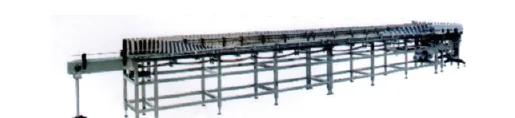
Air conveyor and bottle accumulation
Usable accumulation is a controlled time buffer, not simply conveyor length. Confirm bottle stability and recovery after stops.
Review this interface basis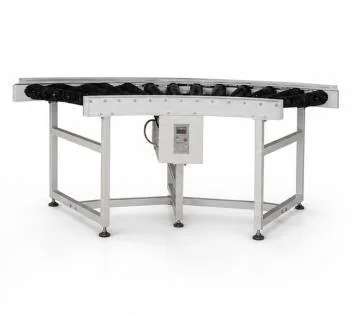
Bottle conveyor transfers
Transfer plates, guides, elevations and speed zones must suit the approved bottle under real wet and dry conditions.
Review this interface basis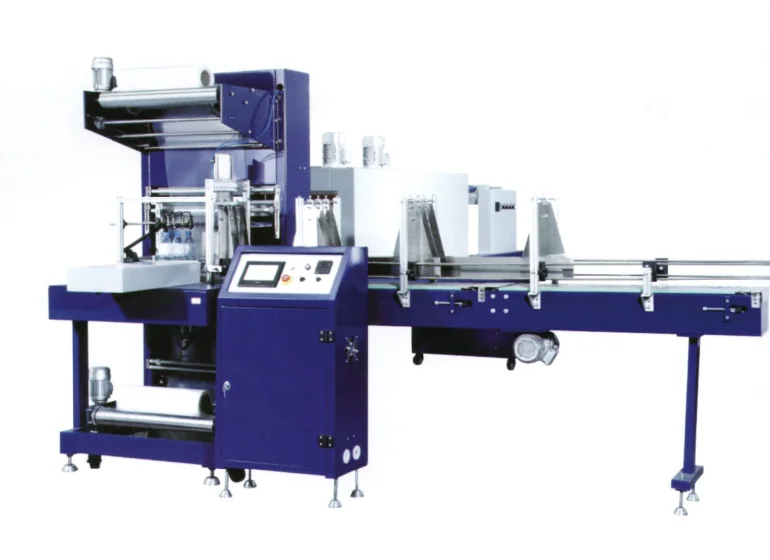
Shrink-film secondary packing
Convert packs per minute to accepted bottles per hour and include grouping, film change, tunnel and cooling losses.
Review this interface basisSource: Allot Tech Beverage Bottling Catalog 2026. Images are representative equipment references; final models and configurations remain project-specific.
Questions before specification
Frequently asked questions
Answers are planning guidance. Project requirements and performance remain subject to confirmed data and agreements.
Is every stop below one minute a micro-stop?
There is no universal threshold that fits every collection system and process. State the chosen duration rule and resolution, retain raw events, and use the same rule across compared windows.
Why not rank machines by total alarm duration?
Related alarms can overlap and describe a propagated symptom rather than the initiating cause. The line may also keep producing from a buffer. Use a reconciled incident timeline and actual output evidence.
Does the largest stop category identify the machine to replace?
No. Validate the cause and test a proportionate countermeasure first. A material, control or transfer problem may be recoverable without replacement; verify where the constraint moves afterward.
Next buyer step