Production Performance Brief
Water Bottling Line Bottleneck Diagnostic
Turn observed production losses into a practical evidence checklist before deciding which machine or interface needs attention.
Choose one answer for each observation during the same reference run. This is an evidence checklist, not an automatic fault diagnosis.
This checklist organizes reported observations. It does not confirm a fault, quantify an output gain or replace qualified site review and approved safety procedures.
Direct answer
Can these observations identify the bottleneck in my water bottling line?
Review point 01
Choose one reference run before answering
Use one bottle and pack configuration, a stated start and finish and one accepted-output count point. Record normal operating conditions and any material, staffing or utility changes. If the evidence comes from different shifts or SKUs, keep it separate instead of turning mixed observations into a single diagnosis.
- Enter a short non-confidential run description; leave proprietary settings, credentials and personal details out.
- Use “not yet measured” when the observation was not checked. Use “not observed” only for the chosen run.
- If every answer is unknown, establish a baseline first. If every answer is no, the six reported symptoms are absent from that observation, not every possible loss.
Review point 02
Follow propagation without mistaking it for the cause
Starved states point the investigation toward missing supply; blocked states point toward a downstream restriction. Neither names the component responsible. Review the first relevant event, neighboring machine states and buffer movement. An independent example has a packer stop, an accumulating conveyor and a later filler-blocked state. Summing every machine stop would count overlapping time more than once; the filler alarm alone would not justify a filler replacement.
- Align machine clocks before interpreting event order; uncertain timestamps remain uncertain evidence.
- Note buffer occupancy before and after the event, not just whether the conveyor eventually became full.
- A restriction can move with the SKU or recovery sequence. Recheck another run before applying one finding to every format.
Review point 03
Choose the next evidence, not a replacement part
The checklist routes positive observations to supporting records. Several positive answers may describe one propagating event, separate losses or an unresolved combination. It deliberately does not score a “most likely failed machine.” Use the bottleneck guide for causal reasoning and the loss Pareto for measured priorities after the records are reconciled.
- Trend a utility condition against the actual loss interval; coincidence alone does not establish causation.
- Separate rejected, held and accepted units at defined count points so a quality loss is not hidden in gross output.
- Collect observations through approved systems and qualified personnel. Do not open guarded areas, bypass interlocks or alter operating limits for this tool.
Review point 04
Review the summary before requesting an intervention
The result stays in this browser tab session where storage is available. It is not an enquiry submission. Continue to the same-language line-review form to inspect or remove the summary, then provide your contact details and production requirement. Editing or clearing the diagnostic invalidates the previous result. If storage is unavailable, the checklist still works but you must copy the relevant non-confidential details into the form yourself.
- State the current accepted output and the required condition separately; neither a catalog rating nor this checklist proves a recoverable gain.
- Request a data review before selecting an upgrade, spare or service scope. Mark unresolved observations explicitly.
- Use the acceptance record when a proposed intervention needs a reproducible before/after comparison.
| Observation | Collect on the same timeline | Do not conclude from this alone |
|---|---|---|
| Starved / low bottle supply | Upstream actual output, bottle gaps and starved intervals. | The filler itself has failed. |
| Blocked downstream | Packer cycles, buffer occupancy and neighboring state changes. | The first machine displaying blocked caused the loss. |
| Utilities / short stops | Approved trend records, event timestamps and stop durations. | Correlation or the highest alarm count proves the cause. |
| Rejects / changeover | Quality categories, count points and last-good to sustained-good timing. | Gross output or the first new-format bottle proves recovery. |
Catalog equipment evidence
See the machines behind this production-line question.
These Allot Tech catalog references connect the technical explanation to physical equipment. Each caption identifies the capacity, interface or acceptance evidence to confirm.
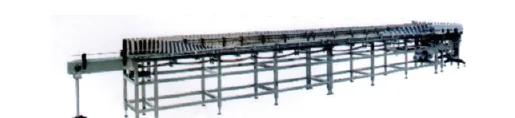
Air conveyor and bottle accumulation
Usable accumulation is a controlled time buffer, not simply conveyor length. Confirm bottle stability and recovery after stops.
Review this interface basis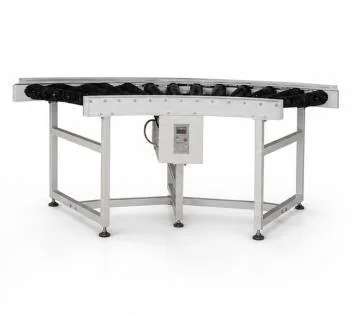
Bottle conveyor transfers
Transfer plates, guides, elevations and speed zones must suit the approved bottle under real wet and dry conditions.
Review this interface basis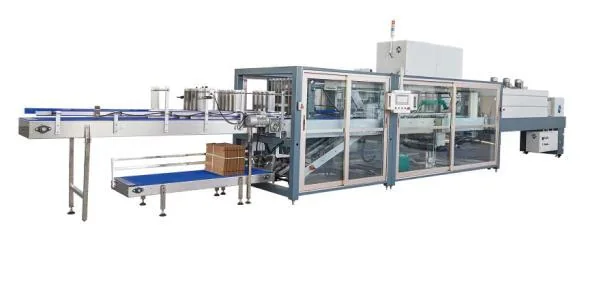
End-of-line packing system
The packer is one connected capacity node; pack pattern, cycle, bottle behavior and discharge flow set the usable rate.
Review this interface basisSource: Allot Tech Beverage Bottling Catalog 2026. Images are representative equipment references; final models and configurations remain project-specific.
Questions before specification
Frequently asked questions
Answers are planning guidance. Project requirements and performance remain subject to confirmed data and agreements.
Does the tool recommend which machine to replace?
No. It prepares an evidence route. Replacement requires a confirmed limitation, interface review and a project-specific comparison of alternatives.
What if every observation is unknown or not observed?
Unknown answers need measurement. All “not observed” answers mean none of these six symptoms was reported for the chosen run, not that the line is healthy. Neither case confirms a bottleneck.
Is my diagnostic sent automatically?
No. Where browser session storage works, a short summary can be carried to the same-language enquiry form. You can review or remove it there; only submitting that form sends the enquiry.
Next buyer step