Production Performance Brief
Bottle Conveyor Transfer Stability
A stable bottle on one conveyor can become unstable at a speed change, dead plate, curve, guide transition or accumulation boundary.
Direct answer
What should be checked when bottles fall or jam at transfers?
Review point 01
Operating decision for Bottle Conveyor Transfer Stability
Treat each transfer as an interface with its own acceptable bottle condition and speed relationship.
- Approved bottle drawing and samples
- Conveyor elevations and direction
- Speed setpoints by section
- Location-specific fall and jam records
Review point 02
Inputs and connected interfaces
Freeze the project inputs before comparing equipment or changing settings. The review must show where the decision connects to upstream supply, downstream demand, controls and utilities.
- Machine discharge to conveyor
- Conveyor-to-conveyor transfer plate
- Curves and guide changes
- Conveyor infeed to labeler or packer
Review point 03
Trade-offs and failure modes
A project-specific choice may improve one condition while moving risk to another node. Review these possible failure modes against the approved bottle, pack, operating window and installed conditions.
- Wide gaps catch small bottle bases
- Guide pressure distorts lightweight bottles
- Abrupt speed change opens or closes gaps
- Wet surfaces change friction during production
Review point 04
Evidence and acceptance record
Close the decision with measurements and revision-controlled records. Final performance remains subject to the approved materials, equipment, utilities, operating conditions and agreed test procedure.
- Slow-motion transfer video
- Guide and plate measurement sheet
- Stop-frequency comparison by SKU
- Sustained run with good-bottle count
Catalog equipment evidence
See the machines behind this production-line question.
These Allot Tech catalog references connect the technical explanation to physical equipment. Each caption identifies the capacity, interface or acceptance evidence to confirm.
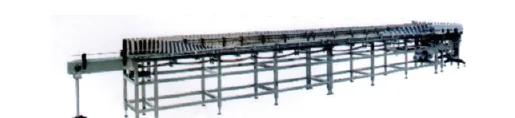
Air conveyor and bottle accumulation
Usable accumulation is a controlled time buffer, not simply conveyor length. Confirm bottle stability and recovery after stops.
Review this interface basisSource: Allot Tech Beverage Bottling Catalog 2026. Images are representative equipment references; final models and configurations remain project-specific.
Questions before specification
Frequently asked questions
Answers are planning guidance. Project requirements and performance remain subject to confirmed data and agreements.
What information should a buyer send for Bottle Conveyor Transfer Stability?
Send the confirmed project inputs, drawings, current line records, photos or video where relevant, and keep unknown values clearly marked for project review.
Does this guide guarantee a production result?
No. It provides a structured planning and evidence basis. Final configuration and performance require project-specific confirmation and an agreed acceptance procedure.
Next buyer step