Production Performance Brief
Upgrade an Existing Water Bottling Line: What Should Change?
Identify which change can increase accepted line-end output before ordering a faster filler, labeler or packer.
Direct answer
Should I retrofit the existing bottling line or replace equipment?
Review point 01
Start with the line you actually have
Record machine make and model, age or condition where known, bottle and pack format, good-output counts, rejects, stops and the production window. An inventory of nameplates is not an output baseline. Identify where a loss begins rather than replacing the machine that stops in response.
- Capture a representative time window and synchronized events.
- Separate lost running time, reduced running speed and rejected product.
- Keep the current line balance beside the requested target.
Review point 02
Example: why a faster filler may add no output
Illustrative screening case: on the same SKU, assume verified compatible running capacities of 6,000 bottles/h at filling, 6,600 at labeling and 4,800 at packing, with adequate upstream supply. Raising the filler alone to 7,200 bottles/h leaves the 4,800 packing constraint unchanged. A target above 6,000 would also require examining filling after the packaging restriction is removed.
- This is a capacity comparison, not a prediction of accepted shift output.
- Convert packs/min to bottles/h using the actual bottles per pack.
- If accumulation is already full, extra conveyor length cannot cure a persistent downstream capacity deficit.
Review point 03
Check the retained-machine interfaces before ordering
Survey transfer elevations, bottle support, conveyor guides, available space, utility connections and control signals. Confirm access to drawings and software with the relevant equipment owner. Different PLC brands can sometimes be integrated, but compatibility is not established by brand names or matching nominal speeds.
- State ready, running, starved, blocked, fault and recovery behavior.
- Confirm the reference bottle, cap, label, pack and change parts at every retained interface.
- Safety zones and interlocks require qualified engineering; never bypass guards or protective functions to prove a speed claim.
Review point 04
Define the cutover and post-upgrade test
Compare scope, production interruption, retained-equipment work and acceptance evidence alongside equipment cost. Plan configuration backups, rollback responsibilities and a controlled restart before modification. No fixed payback or universal downtime estimate follows from this guide.
- Set the shutdown window and conditions for returning to the former configuration.
- Use the same SKU, time window and good-output counter for before/after comparison.
- Send the baseline, target, equipment list and known bottleneck to request an upgrade review.
| Option | When to investigate it | Evidence needed | Do not assume |
|---|---|---|---|
| Recover existing performance | Avoidable stops or rejects dominate; running capacities appear adequate | Loss log, maintenance findings, material and recipe checks | A maintenance action guarantees the target without retesting. |
| Rebalance the connected line | Transfers, signals or recovery cause repeated starved/blocked states | Event sequence, usable buffer and interface survey | Longer conveyors solve a persistent capacity shortfall. |
| Replace a constrained module | A repeatable capacity or SKU-compatibility limit remains | Actual-format test and target-state line balance | A faster replacement is automatically compatible with retained machines. |
| Reconfigure more of the line | Several modules or a new format impose linked limits | Compared scope, interruption plan and connected acceptance test | A single-machine speed upgrade is sufficient. |
Catalog equipment evidence
See the machines behind this production-line question.
These Allot Tech catalog references connect the technical explanation to physical equipment. Each caption identifies the capacity, interface or acceptance evidence to confirm.
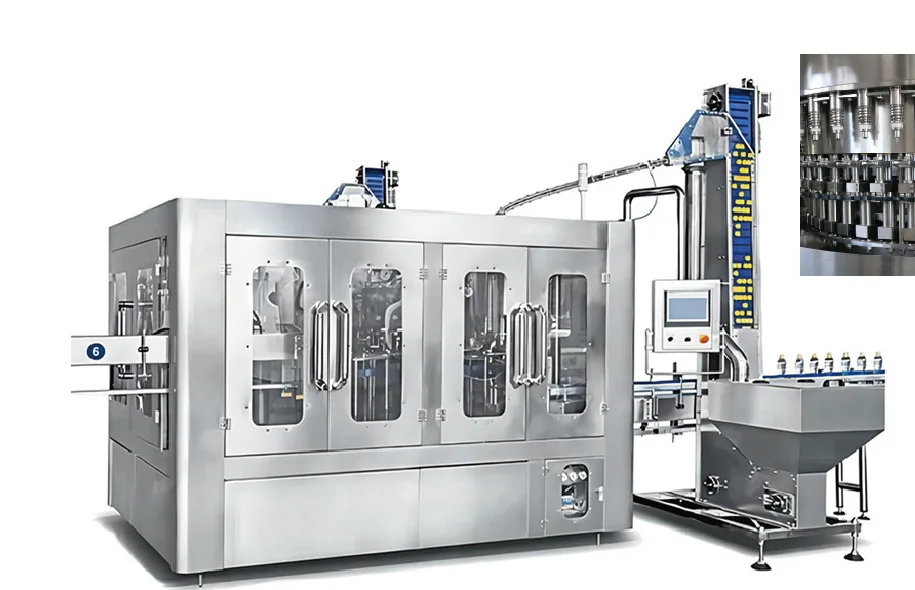
Rinse-fill-cap center
State filler BPH with the reference bottle, product, cap, test window and accepted-output counting point.
Review this interface basis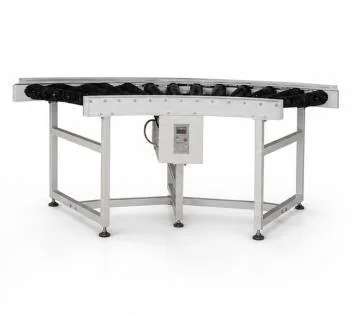
Bottle conveyor transfers
Transfer plates, guides, elevations and speed zones must suit the approved bottle under real wet and dry conditions.
Review this interface basis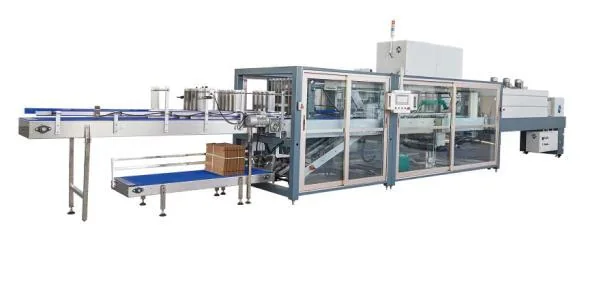
End-of-line packing system
The packer is one connected capacity node; pack pattern, cycle, bottle behavior and discharge flow set the usable rate.
Review this interface basisSource: Allot Tech Beverage Bottling Catalog 2026. Images are representative equipment references; final models and configurations remain project-specific.
Questions before specification
Frequently asked questions
Answers are planning guidance. Project requirements and performance remain subject to confirmed data and agreements.
Can new equipment be integrated with machines from another manufacturer?
It may be possible after checking physical, utility, control and safety interfaces and the supported bottle/pack. No blanket compatibility promise is made.
How much downtime will an upgrade require?
It depends on the verified modification scope, access, preassembly, controls and test plan. A meaningful proposal should identify the shutdown activities and restart criteria rather than offer an unsupported universal duration.
Should I replace the filler when it is often stopped?
First determine whether it is faulty, starved by upstream supply or blocked by downstream equipment. Its stop count alone does not prove it is the initiating constraint.
Next buyer step