Production Performance Brief
Plan Maintenance Around the Return to Accepted Production
A completed repair is not yet a recovered production line. Prepare the work, protect the restart window and verify the output that the next shift can actually use.
Direct answer
What should a water bottling line maintenance plan prove?
Review point 01
Turn a maintenance task into an executable work package
Use the applicable equipment manual, actual condition and approved site requirements to establish the task and its trigger. Do not copy a universal daily, weekly or monthly schedule onto unlike machines. Before reserving a production stop, confirm the asset and revision, work scope, required skills, tools, approved procedures and the evidence needed to release the line afterward.
- Name the task owner and the operations or quality role responsible for the applicable release checks.
- Reserve usable, configuration-matched parts against the job; a purchase order is not proof that a kit is ready.
- Keep safety, hygiene and mandatory service requirements independent of any output target. Only qualified personnel should execute the applicable procedures.
Review point 02
Coordinate the whole line window, not just one machine
A filler job may affect upstream bottle supply and downstream packing, while work on a shared utility can affect several machines. Map these dependencies before combining tasks in one stop. Account separately for preparation, permitted maintenance work, restoration checks and production recovery; do not book every minute of the available window as hands-on repair time.
- Confirm access and shared people or tools so apparently parallel jobs do not compete for the same resource.
- Identify any approved parameter, software or configuration records needed for restoration; keep protected access data out of public enquiries.
- If a task cannot meet its prerequisites, escalate the plan rather than silently dropping required checks or extending an unapproved operating interval.
Review point 03
Close the job on evidence, not the first bottle
Record work completion, technical release and accepted production as separate milestones. An independent example uses a previously agreed target of 1,800 accepted bottles at one line-end point in a 30-minute observation window. If 1,800 bottles finish but 36 are not accepted and none are pending classification, accepted output is 1,764, equivalent to 3,528 bottles/hour. A 3,600 BPH display or the first bottle after restart does not meet that stated accepted-count target.
- The example is illustrative, not a machine rating, prescribed test duration or customer result.
- Use the actual agreed SKU, count point, quality requirements and observation window; record rejected or held units without counting them as accepted.
- An output shortfall calls for investigation of the connected conditions. The count alone does not identify which machine caused it.
Review point 04
Use repeated findings to choose the next intervention
Keep the completed task, as-found condition, parts used, restart findings and subsequent production result together. If the same symptom returns, review the cause and operating conditions before buying another identical replacement. Where a verified hardware or integration limit remains, prepare a focused upgrade review rather than treating more frequent maintenance as the only answer.
- Share a non-confidential job summary, affected equipment, reference SKU and before/after accepted-output observations.
- Separate tasks completed, unresolved defects and restricted operating conditions; do not label unresolved work as fully released.
- Use the adjacent spares guide for stocking decisions and the performance-test guide for a reproducible output record.
| Decision point | Evidence to have | If evidence is missing |
|---|---|---|
| Task is applicable | Installed asset/revision, relevant procedure and task trigger. | Resolve the scope with the responsible technical team. |
| Job is executable | Qualified people, approved access, tools and released parts reserved for the job. | Re-plan or escalate the missing prerequisite. |
| Dependencies are coordinated | Shared utilities, neighboring machines and resource conflicts are included. | Do not assume isolated-machine completion restores the line. |
| Technical and quality release is recorded | Applicable restoration and product checks, named release responsibility and open items. | Keep the status unresolved; follow the approved site process. |
| Accepted output is demonstrated | Reference SKU, fixed observation window and accepted line-end count. | Investigate the gap before declaring production recovery. |
Catalog equipment evidence
See the machines behind this production-line question.
These Allot Tech catalog references connect the technical explanation to physical equipment. Each caption identifies the capacity, interface or acceptance evidence to confirm.
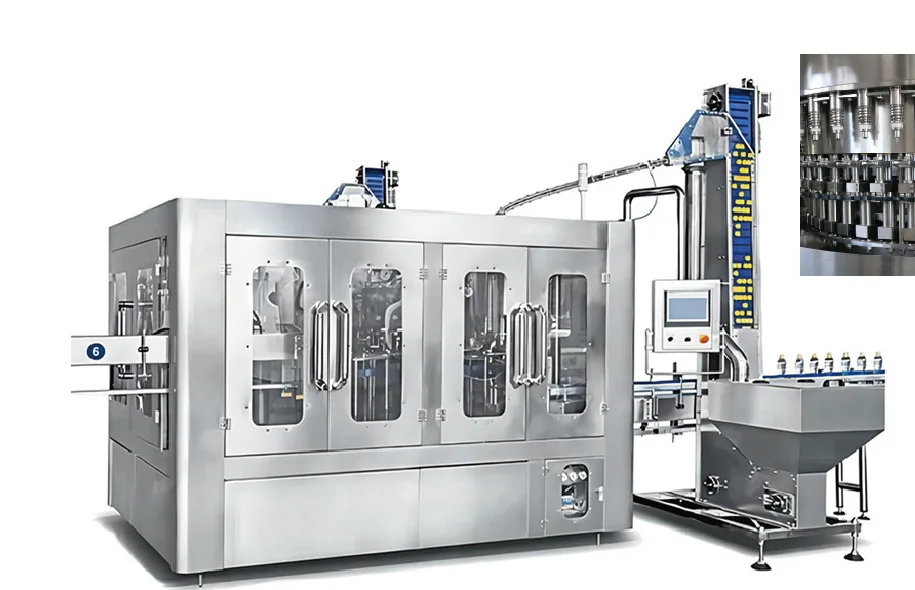
Rinse-fill-cap center
State filler BPH with the reference bottle, product, cap, test window and accepted-output counting point.
Review this interface basis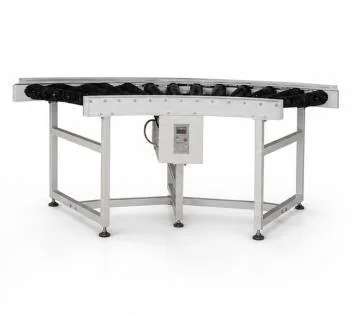
Bottle conveyor transfers
Transfer plates, guides, elevations and speed zones must suit the approved bottle under real wet and dry conditions.
Review this interface basis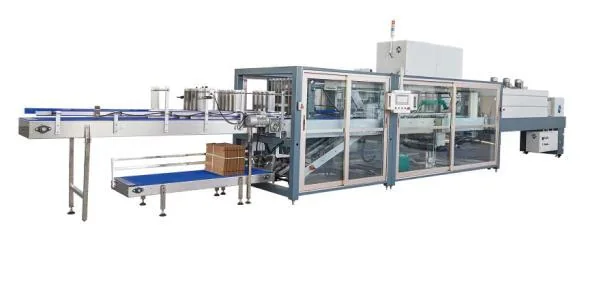
End-of-line packing system
The packer is one connected capacity node; pack pattern, cycle, bottle behavior and discharge flow set the usable rate.
Review this interface basisSource: Allot Tech Beverage Bottling Catalog 2026. Images are representative equipment references; final models and configurations remain project-specific.
Questions before specification
Frequently asked questions
Answers are planning guidance. Project requirements and performance remain subject to confirmed data and agreements.
Is this a universal maintenance schedule?
No. Task intervals and methods come from the applicable manufacturer instructions, equipment condition and approved site requirements. This guide helps coordinate the production window and evidence of recovery.
Can a completed maintenance work order count as line acceptance?
Not by itself. Work completion records what was done; technical and quality release and the agreed output observation answer whether the connected line is ready to produce.
Should recurring faults always lead to more spare purchases?
No. Check failure cause, installation and operating conditions first. Extra stock may shorten a parts wait without correcting the recurring failure or proving production recovery.
Next buyer step