Production Performance Brief
Water Bottling Line Capacity Calculator
Compare connected capacities on one bottle and pack basis, identify the lowest entered rate and model good output without hidden efficiency defaults.
Use compatible gross reference capacities for one bottle and pack. Do not enter accepted shift-average rates and deduct their losses again. Leave unknowns blank; percentages are not prefilled.
Preliminary planning only; not a specification, guaranteed rate or commercial offer. The latest result stays in this browser tab until you clear it. It is sent to Allot Tech only if you submit an enquiry.
Direct answer
How is water bottling line capacity calculated?
Review point 01
Use one SKU and one gross reference-rate basis
Enter the same bottle, closure, label and pack throughout. Water means net product water available for filling, not raw-water feed. Bottle supply can be a blower or purchased-bottle feeder. Reference rates must be compatible capacities before the losses modeled below.
- Do not mix a nameplate maximum with a measured accepted-shift average.
- Use the other-constraint field for a known lower connected stage.
- Unknown stages stay blank; partial data cannot establish full-line output.
Review point 02
Worked example: the packer limits the entered capacities
Illustration only: 0.5 L bottles, 3,600 L/h product water, 7,000 bottles/h supply, 6,000 filling, 6,500 labeling, 8 packs/min and 12 bottles/pack. Water equals 7,200 bottles/h; packing equals 5,760 bottles/h. The lowest entered capacity is 5,760.
- With deliberately chosen 90% availability, 95% performance and 99% quality: 5,760 × 0.90 × 0.95 × 0.99 = 4,875.552 good bottles per planned hour.
- Over 8 planned hours: 39,004.416 modeled bottles, displayed approximately. Actual counts are whole bottles.
- These are hypothetical inputs, not Allot Tech ratings or a guaranteed result.
Review point 03
Do not deduct downtime twice
Use planned production hours before the downtime represented by availability. For example, if seven runtime hours come from an eight-hour planned window, use 8 hours with 87.5% availability, not 7 hours with the same availability. Performance and quality must also exclude losses already reflected in their reference rates.
- A blank percentage means unknown; 0% means zero modeled good output.
- The tool rejects percentages above 100, negative values and fractional bottles per pack.
- Output estimates are withheld if any necessary stage, factor or time is missing.
Review point 04
Turn the result into a purchasing question
Check the lowest stage on the real SKU and review transfers, utilities, buffers and recovery before buying a faster machine. The latest calculation can accompany the enquiry in this browser tab; you can review and clear it before submitting.
- Send the bottle/pack specification and required accepted output.
- Identify whether entered rates are verified, quoted or still assumptions.
- Request a common connected performance test rather than treating this model as acceptance evidence.
Catalog equipment evidence
See the machines behind this production-line question.
These Allot Tech catalog references connect the technical explanation to physical equipment. Each caption identifies the capacity, interface or acceptance evidence to confirm.
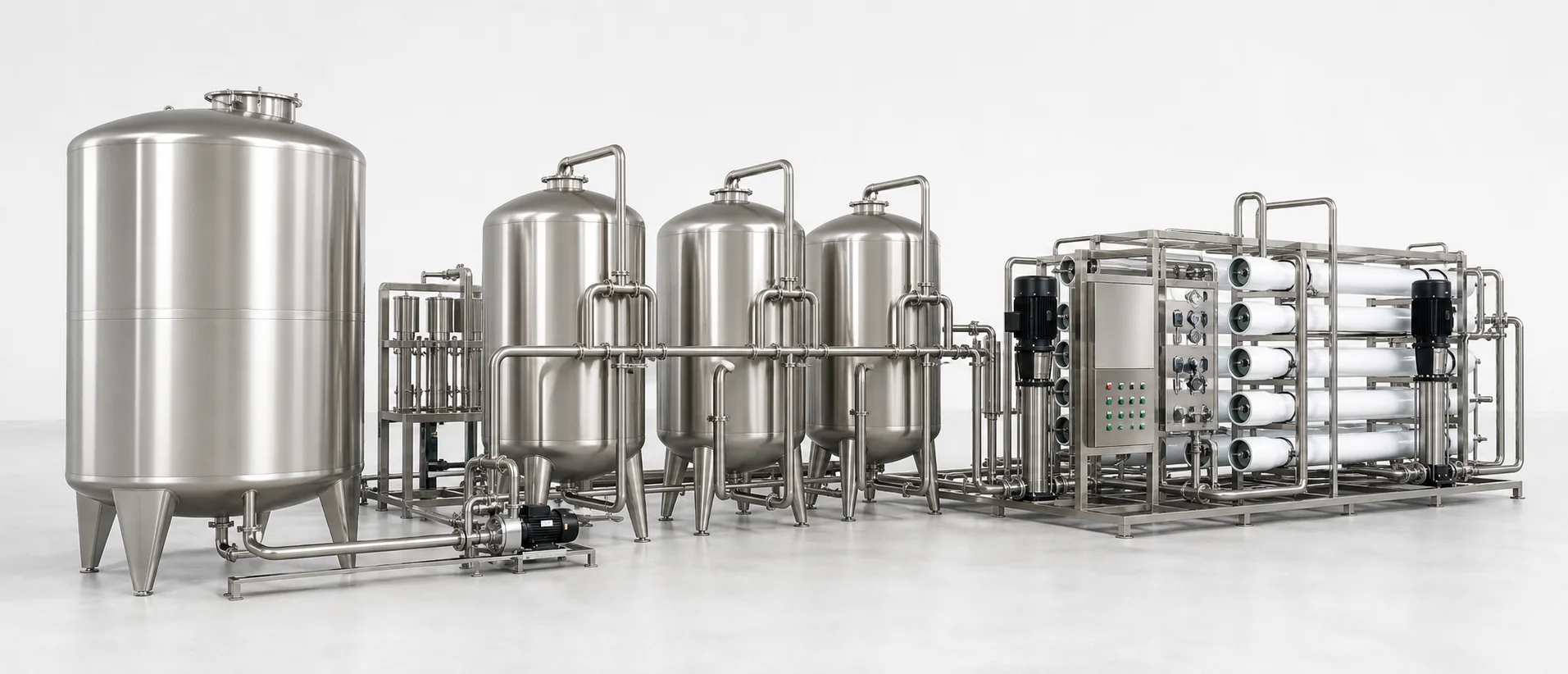
Water treatment and product-water supply
Confirm net treated-water flow at the filler connection. Recovery, sanitation and transfer demand can reduce usable flow.
Review this interface basis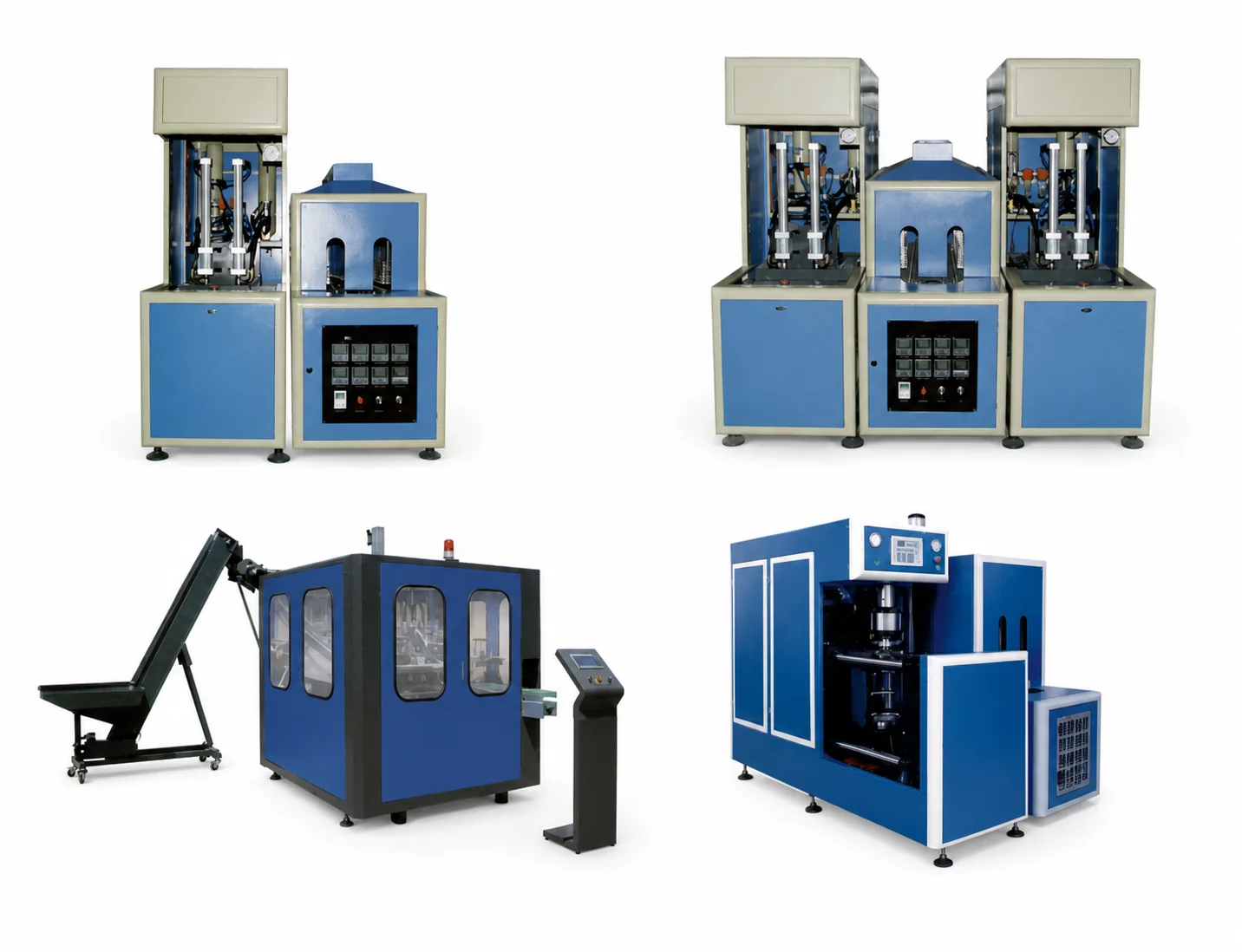
PET bottle blow molding
Accepted bottle output depends on the approved preform, bottle geometry, mold, recipe, high-pressure air and cooling.
Review this interface basis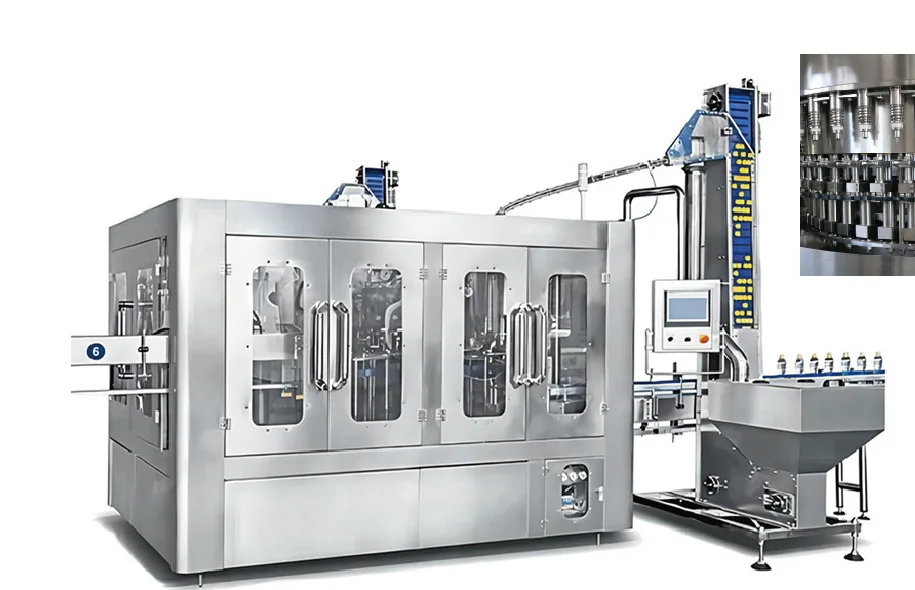
Rinse-fill-cap center
State filler BPH with the reference bottle, product, cap, test window and accepted-output counting point.
Review this interface basis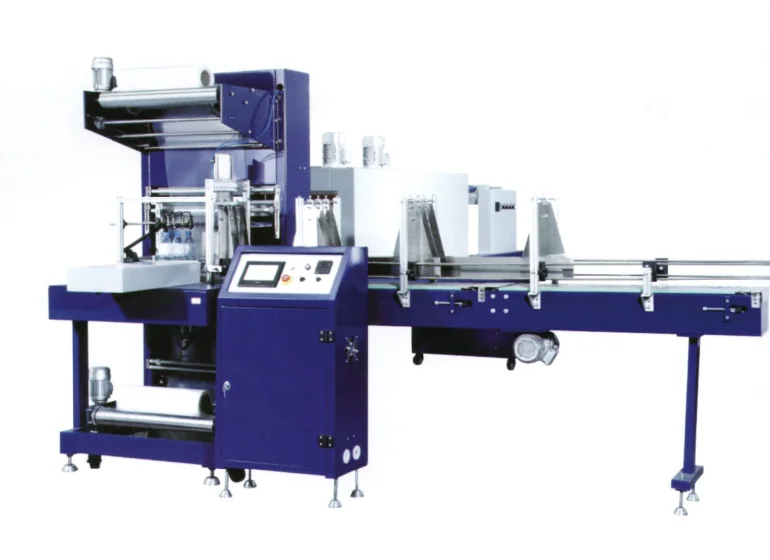
Shrink-film secondary packing
Convert packs per minute to accepted bottles per hour and include grouping, film change, tunnel and cooling losses.
Review this interface basisSource: Allot Tech Beverage Bottling Catalog 2026. Images are representative equipment references; final models and configurations remain project-specific.
Questions before specification
Frequently asked questions
Answers are planning guidance. Project requirements and performance remain subject to confirmed data and agreements.
Does a partial calculation establish line capacity?
No. It compares only entered capacities. Missing stages may impose a lower limit; complete all required inputs for a modeled output scenario.
Can I use a measured good-output average here?
Do not apply availability, performance and quality again to an accepted average that already includes those losses. Use a compatible gross reference-rate basis or compare the measured good average directly against demand.
Is the result sent automatically?
No. It stays in session storage in this tab and is sent only if you submit the enquiry form. Clear removes the carried calculation.
Next buyer step