Production Performance Brief
Specify a Water Bottling Line Changeover Before You Order
Turn “fast bottle-size changeover” into a defined transition that the supplier and your production team can verify together.
Direct answer
What should a buyer confirm before accepting a changeover-time claim?
Review point 01
Specify the direction of the transition
An approved bottle list is not a tested changeover sequence. Record A to B separately from B to A because retained materials, tooling positions, preparation and verification can differ. Use drawing and recipe revisions for the bottle, closure, label and complete pack, not volume alone. For a new line, identify which transitions must be demonstrated before approval and which remain conditional on site conditions.
- If two formats share a neck finish, still verify the bottle body, transfers, labeling and final pack at the agreed output condition.
- Identify supplied change parts and required adjustments or engineering changes at each affected machine.
- A new supplier, drawing revision or pack arrangement can invalidate part of the previous evidence; name the affected checks rather than assuming automatic compatibility.
Review point 02
Make timing claims comparable
Choose one physical line-end count point for the last accepted old-format unit and the accepted new-format output. Record first material through the machine, first accepted unit and return to the agreed sustained condition as separate milestones. Define how long and under what quality conditions the new output must remain stable; there is no universal duration for every project.
- State whether the claim covers only mechanical work or the whole transition, including clearance, recipe checks, first-off approval and recovery.
- Name staffing, prepared parts, tools, material readiness and any temporary factory setup used during the test.
- List required hygiene and safety activities openly. Do not remove them to match a faster headline time.
Review point 03
Compare transition evidence before comparing optional upgrades
The checklist below separates a stated feature, a testable condition and the evidence still needed. A tool-free adjustment or automatic recipe can be useful, but its value depends on whether that activity limits your complete transition. Keep claimed, demonstrated and not-tested results distinct; an untested direction should not inherit another direction’s result.
- Request the actual transition timeline and count/quality records, not only a video of one machine adjustment.
- State which formats, crew, parts and machine interfaces the proposed changeover option covers.
- Agree how deviations are corrected and retested before treating the claim as an accepted performance condition.
Review point 04
Send a transition brief for a production-line review
Start with the two SKU identifiers, drawings or non-confidential dimensions, closure and label details, bottles per pack, retained equipment and the change frequency you expect. Add required accepted output and any supplier claim you need to verify. If the line already operates, include a measured transition record; the improvement guide explains how to find the limiting tasks.
- Mark unknown parts, timings and approvals as unknown; do not fill them with estimates presented as measurements.
- Separate the required result from the supplier’s current evidence and proposed options.
- The next step is a project-specific performance discussion, not a universal promise that every size runs on the same setup.
| Comparison item | Write into the requirement | Evidence to request |
|---|---|---|
| Transition identity | Outgoing SKU and revision → incoming SKU and revision; direction matters | Separate records for the transitions actually tested. |
| Clock boundary | Last accepted old unit → sustained accepted new output at the named line-end point | Timestamped milestones and agreed stability/quality rule. |
| People and preparation | Crew, prepared parts, tools and material readiness | Conditions used for the reported time and tasks excluded from it. |
| Connected scope | Included machines, buffers, inspection and final packing | Temporary substitutes and site-dependent steps listed explicitly. |
| Result status | Claimed, demonstrated, conditional or not tested | Counts, quality disposition, deviations and required retest. |
Catalog equipment evidence
See the machines behind this production-line question.
These Allot Tech catalog references connect the technical explanation to physical equipment. Each caption identifies the capacity, interface or acceptance evidence to confirm.
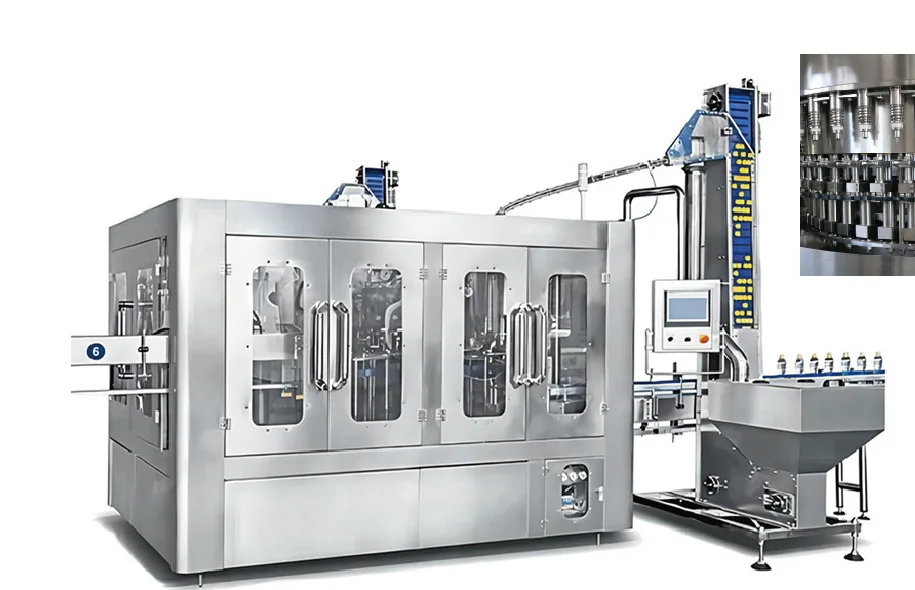
Rinse-fill-cap center
State filler BPH with the reference bottle, product, cap, test window and accepted-output counting point.
Review this interface basis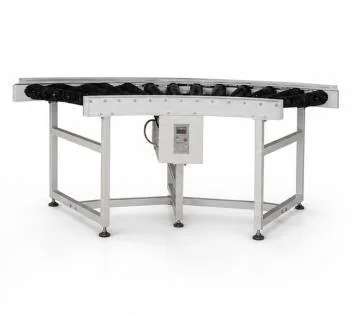
Bottle conveyor transfers
Transfer plates, guides, elevations and speed zones must suit the approved bottle under real wet and dry conditions.
Review this interface basis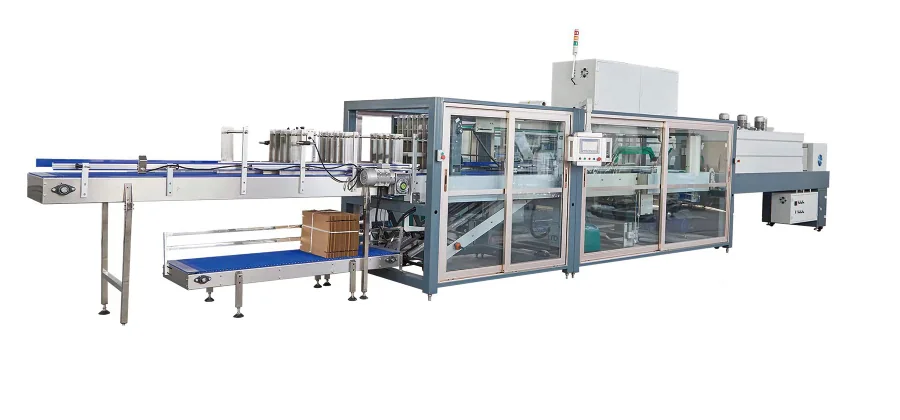
Carton and case packing
Confirm case material, bottle arrangement, closure method, discharge condition and accepted complete-case output.
Review this interface basisSource: Allot Tech Beverage Bottling Catalog 2026. Images are representative equipment references; final models and configurations remain project-specific.
Questions before specification
Frequently asked questions
Answers are planning guidance. Project requirements and performance remain subject to confirmed data and agreements.
Does the same neck finish mean a recipe-only changeover?
No. It does not establish body handling, transfer stability, label application, inspection or pack compatibility. Confirm what needs adjustment, physical parts or further verification.
Can one A-to-B test prove the B-to-A time?
Not automatically. The reverse sequence can have different clearance, preparation and adjustment needs. Identify which direction the evidence covers.
Is a machine’s advertised change time the whole-line time?
Only if its stated scope and measurement boundary actually cover the complete transition you require. Keep isolated machine work and return to accepted line-end output separate.
Next buyer step