Production Performance Brief
Reduce Bottling Line Changeover Time by Finding the Limiting Tasks
Measure the complete recovery window, distinguish task effort from elapsed production loss, and verify whether a change actually brings accepted output back sooner.
Direct answer
How can a bottling line reduce changeover time without hiding losses?
Review point 01
Freeze a repeatable baseline before changing the method
Choose a transition that matters to the production plan, with the same outgoing and incoming revisions, crew basis and line-end measurement point. Preserve timestamps for each task and for first accepted and sustained accepted new output. Record rejects, material use and unusual interventions beside the time, so a faster restart does not hide extra waste.
- Do not mix time from unrelated SKU pairs into one improvement claim.
- Record both elapsed minutes and staffing; a shorter window with extra people is a different operating basis.
- Use existing approved procedures. Observation or timing must not interfere with safe operation.
Review point 02
Separate preparation from work that requires the stop
Check whether parts identification, document checks and material preparation can be completed before the transition without entering restricted areas or disturbing production. Work that requires isolation, clearance, approved hygiene steps or first-off checks stays under the required procedure. Moving work outside the measured stop does not eliminate its labor or material cost.
- Assign a part/recipe revision and an owner to each preparation task.
- Parallel work is possible only when access, staffing, machine dependencies and safety procedures allow it.
- Record waiting for tools, materials, approval or a preceding task instead of hiding it inside “adjustment”.
Review point 03
Example: 46 task-minutes can occupy a 38-minute window
Independent illustrative sequence: minute 0 is the last accepted outgoing unit at the agreed line-end point. Approved clearance takes minutes 0–6. Mechanical conversion then takes 6–22, while a separate permitted recipe task runs 6–14. First-off checks run 22–28 and verified recovery runs 28–38, ending at the agreed sustained-output condition. The tasks total 6 + 16 + 8 + 6 + 10 = 46 minutes, but the elapsed window is 6 + max(16,8) + 6 + 10 = 38 minutes. This is a dependency example, not an operating instruction or measured customer result.
- The transition window is not necessarily 38 minutes of zero output: accepted new units may appear during recovery. Keep their counts and the actual stop/running states for the production record.
- Reducing the recipe task from 8 to 4 minutes alone leaves the 38-minute finish unchanged.
- If an approved change reduces the mechanical task from 16 to 11 minutes with all other conditions unchanged, the hypothetical window becomes 33 minutes.
- The five minutes of modeled opportunity are not guaranteed extra saleable production; confirm repeatability, quality and downstream recovery.
Review point 04
Verify the improvement and decide whether hardware is needed
Repeat the same transition after one documented change and show the observed range, not only the fastest trial. Keep changes in crew, materials, quality checks and utilities visible. Confirm whether accepted line-end output returns sooner and whether the loss moved to a different task or machine.
- If preparation or waiting governs the finish, evaluate that evidence before buying automation for an unrelated task.
- If a verified mechanical limitation remains, compare an engineered change or replacement against the affected transition and required output.
- Do not bypass guards, interlocks, isolation requirements or hygiene/quality checks to obtain a shorter time. Send a non-confidential task timeline and retained-equipment details for review.
| Task | Start → finish, minutes | Task duration | Dependency |
|---|---|---|---|
| Approved clearance | 0 → 6 | 6 minutes | Required before the two conversion tasks. |
| Mechanical conversion | 6 → 22 | 16 minutes | Governs the next start in this example. |
| Permitted recipe task | 6 → 14 | 8 minutes | Parallel only under the stated approved conditions. |
| First-off verification | 22 → 28 | 6 minutes | Waits for both conversion tasks. |
| Verified recovery | 28 → 38 | 10 minutes | Finishes at the agreed sustained accepted output. |
Catalog equipment evidence
See the machines behind this production-line question.
These Allot Tech catalog references connect the technical explanation to physical equipment. Each caption identifies the capacity, interface or acceptance evidence to confirm.
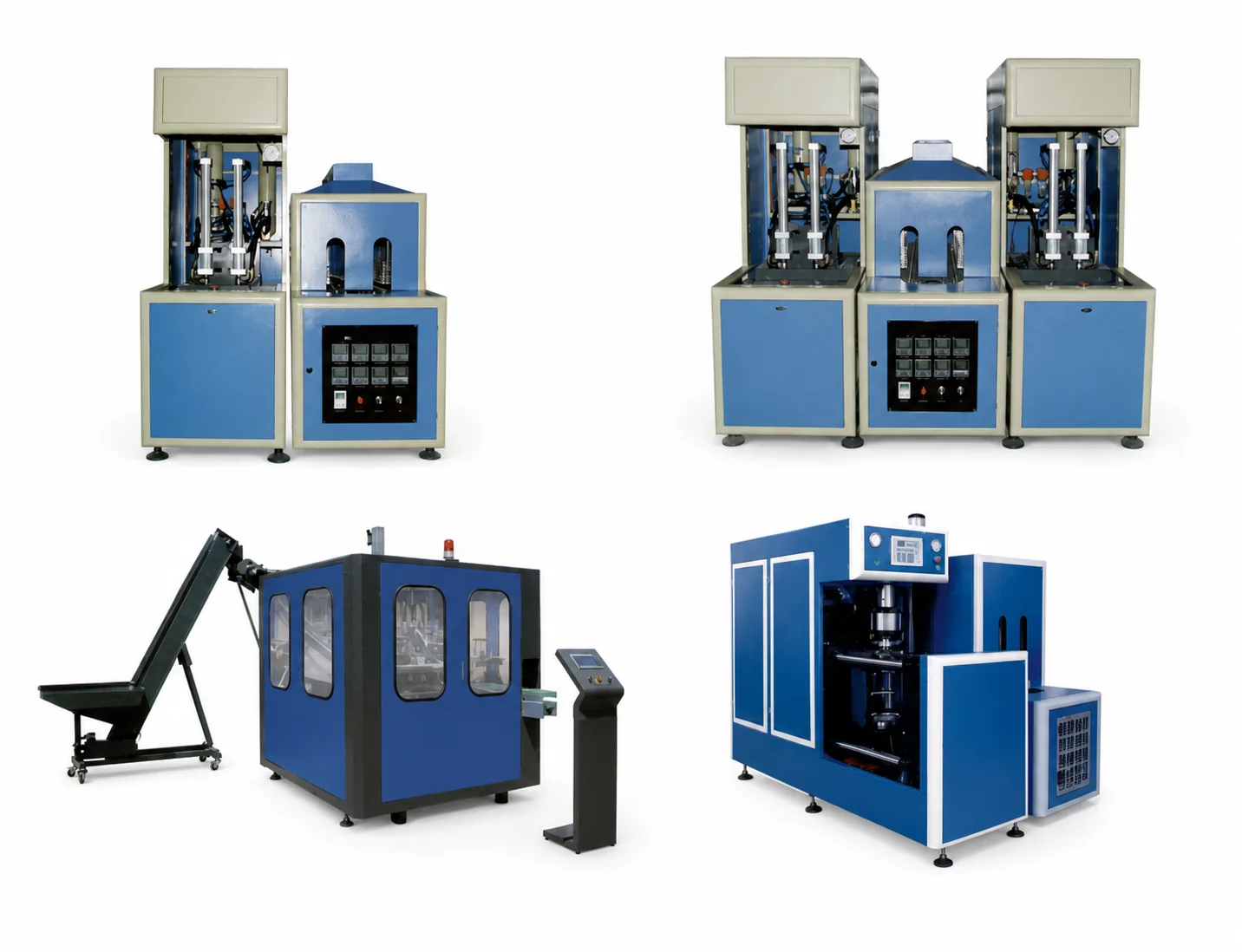
PET bottle blow molding
Accepted bottle output depends on the approved preform, bottle geometry, mold, recipe, high-pressure air and cooling.
Review this interface basis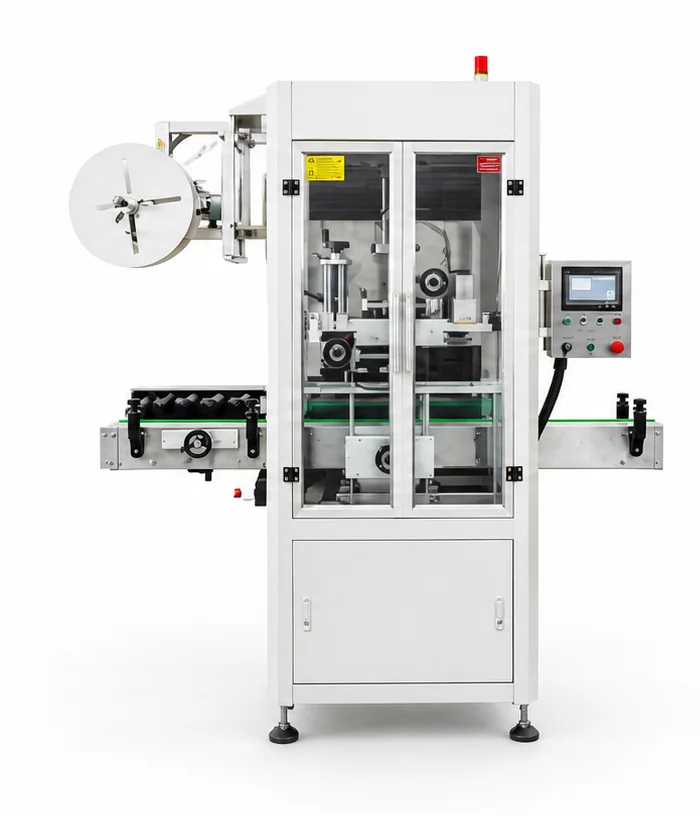
Sleeve labeling
Label application depends on bottle spacing, surface condition, material, recipe, shrink response and reject handling.
Review this interface basis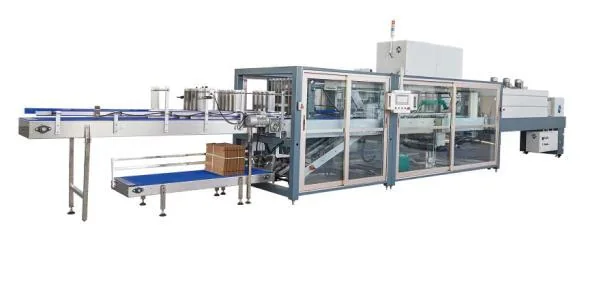
End-of-line packing system
The packer is one connected capacity node; pack pattern, cycle, bottle behavior and discharge flow set the usable rate.
Review this interface basisSource: Allot Tech Beverage Bottling Catalog 2026. Images are representative equipment references; final models and configurations remain project-specific.
Questions before specification
Frequently asked questions
Answers are planning guidance. Project requirements and performance remain subject to confirmed data and agreements.
Is first bottle out the correct finish?
Not when the agreed endpoint is accepted, sustained line-end output. Record first material, first accepted unit and sustained output separately; use the same finish rule before and after the change.
Can I add all operators’ task durations to get line downtime?
No. Some tasks overlap, while other time is waiting or recovery. Build the dependency timeline and measure the actual line-end window; keep labor effort as a separate measure.
Does preparing parts while running remove the work entirely?
No. It may shorten the stopped window if permitted safely, but the preparation still uses labor, space and materials. Record that work and any changed staffing.
Should the shortest trial become the guaranteed changeover time?
No. Check repeatability, scope and agreed conditions. A single fastest observation does not establish a production commitment across all formats or operators.
Next buyer step