Production Performance Brief
Why Does the Water Filler Keep Waiting for Supply?
The blower can be running while the filler lacks bottles. A full tank or cap hopper can also hide a delivery gap. Find the missing condition at the receiving point before choosing an upgrade.
Direct answer
What should you check when a water filler repeatedly waits for supply?
Review point 01
Verify the meaning of the waiting signal
Record the bottle, closure, recipe and production window. Ask the responsible engineer to confirm the signal source, state priority and stop-reason definition against an observed event. A waiting label is an observation, not proof of a failed component. No alarm does not prove that all prerequisites are satisfied.
- Separate absent material from absent permission and internal conditions.
- Keep the physical observation and raw signal together when they disagree.
Review point 02
Compare three supply channels on one duty
Illustration only, not an equipment rating: 6,000 bottles/hour of 0.5 L requires 100 bottles/minute and a nominal product volume of 50 L/minute. With one cap per bottle, basic cap demand is 100/minute. Rinsing, rejects, recirculation and other consumption must be considered separately; this arithmetic is not complete system sizing.
- Compare actual delivered accepted quantities for the same SKU, not motor speed.
- Declare units and count points; tank stock alone does not demonstrate delivery flow.
Review point 03
Follow accepted bottles from source to filler
Compare source good-bottle discharge with arrival immediately before the filler. Include a feeder or unscrambler for purchased bottles and mark rejects, gaps and manual additions between the points. If an upstream zone stays occupied while the infeed is empty, investigate transfer and release rather than immediately buying more blowing capacity.
- Record source counts, zone occupancy and gap timing in one window.
- Retain bottle neck/shape and material lot; adjustments require qualified personnel and approved procedures.
Review point 04
Check water delivery and cap presentation separately
Observe water availability at the declared filler inlet, not only treatment output or tank level. Compare approved flow/pressure observations with the operating basis. For caps, separate bulk stock, elevator/sorter operation and correct presentation at the capper. A full hopper cannot establish that usable closures reach the application point.
- Log replenishment, the first missing condition and the moment it returns.
- Use manufacturer limits and hygiene rules; this guide prescribes no universal pressure or feeder setting.
Review point 05
Align physical events and readiness records
Use one clock basis for source machines, conveyors, filler and manual observations. Declare sampling interval, clock offset and missing records. Material present with permission absent calls for a mapping review; several channels changing together may justify checking a shared utility. Neither pattern alone proves a defective control or utility.
- Preserve signal name, source, meaning and transitions beside the observed condition.
- Do not force readiness bits, bypass interlocks or enter equipment to test a theory.
Review point 06
Observe replenishment through stable recovery
Under approved procedures, record interruption, refill, restart and return to sustained accepted output. Check whether the next gap occurs before recovery. Beginning and ending inventory matter: a short trial may consume stored bottles without improving supply. A motor restart is not evidence that all three supply paths have returned.
- Record restoration time, buffer levels, good output and rejects.
- Repeat comparable SKU windows and declare manual intervention or changed materials, utilities and staffing.
Review point 07
Turn the record into an intervention decision
A source restriction, a transfer problem and a readiness mismatch require different proposals. Ask which observed condition a proposal changes, what evidence supports it and what result would reject its explanation. Consider restoring the existing supply capability or replenishment practice before assuming replacement. A new machine needs proof of the delivery handoff and recovery, not only a higher nameplate rate.
- Send the route sketch, bottle/cap details, source/infeed counts, state definitions and timestamp uncertainty.
- Mark unknowns; this preliminary review does not diagnose a failed part, validate safety or guarantee output.
Terminology background, not equipment certification
| Observation | Compare | Next review |
|---|---|---|
| Infeed empty; source count falls | Accepted source counts and rejects | Source or replenishment |
| Infeed empty; upstream stock remains | Transfer, occupancy and release | Delivery path |
| Bottles present; product unavailable | Delivery at the filler connection | Product-water interface |
| Caps stocked but not presented | Sorter/chute and cap-ready events | Closure delivery |
| Display disagrees with the scene | Raw tag definition and common clock | Mapping or measurement |
Use equipment images as interface evidence, not as a final model promise.
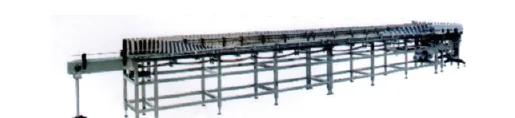
Bottle supply
Check the supply side of a waiting filler.
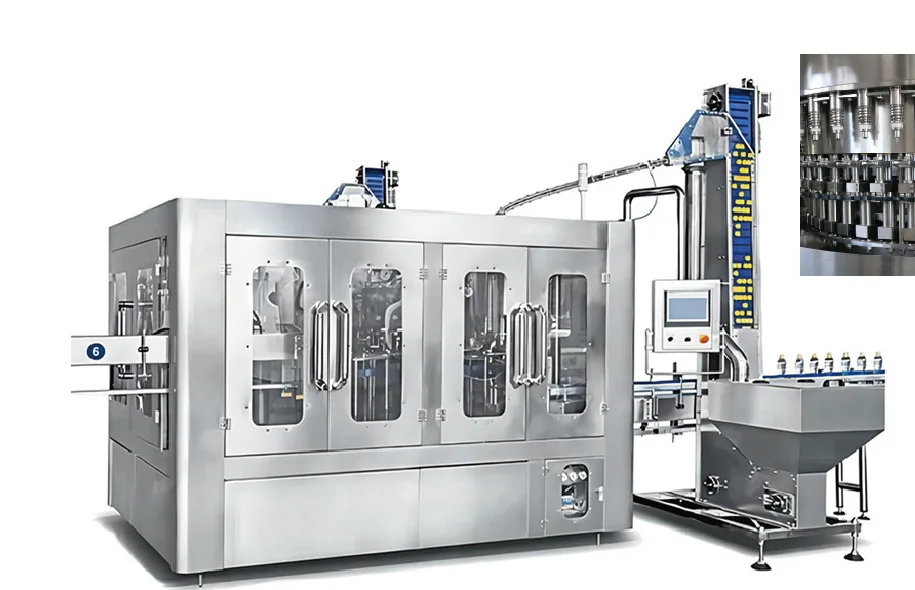
Filling center
Distinguish the filler state from its stop reason.
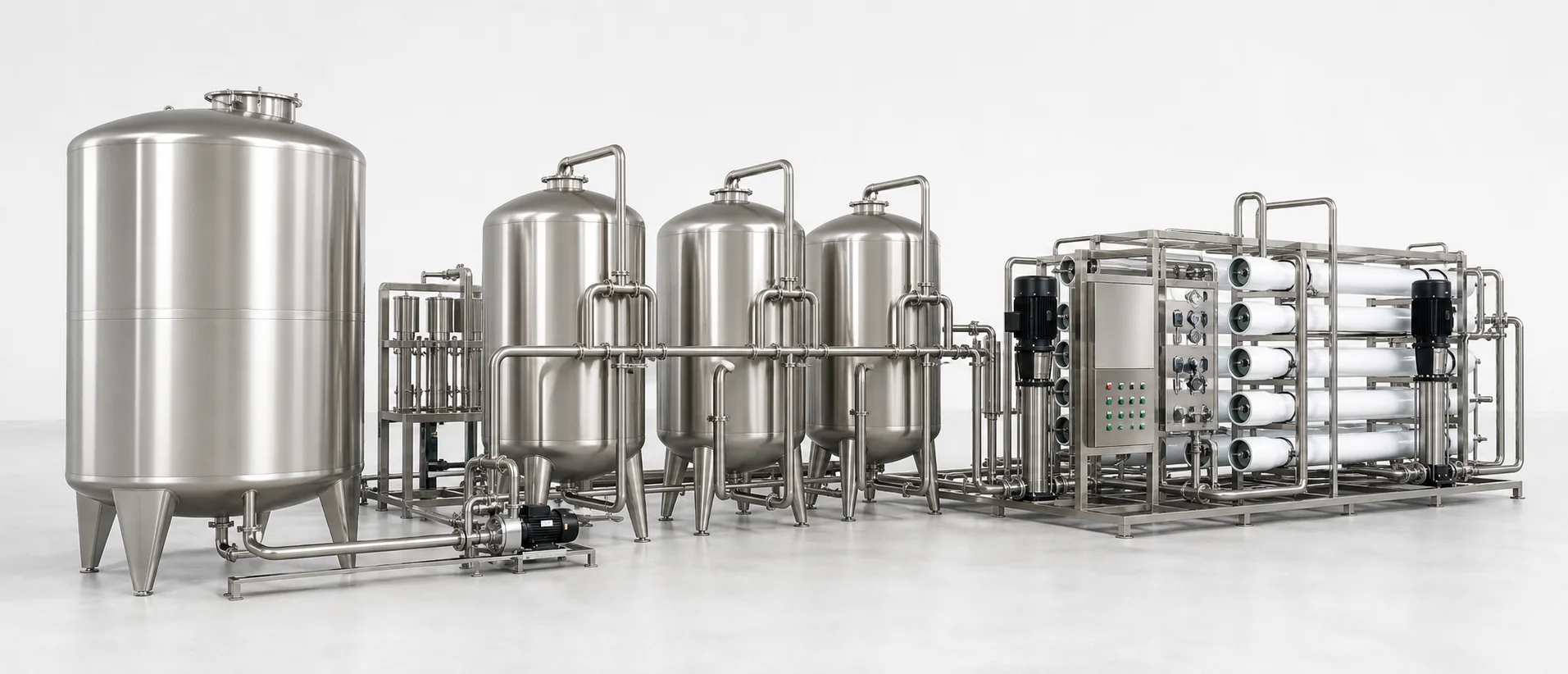
Product-water supply
Review delivered water at the filler connection, not tank stock alone.
Representative equipment reference. Final configuration is project-specific. Source: Allot Tech Beverage Bottling Catalog 2026.
Questions before specification
Frequently asked questions
Answers are planning guidance. Project requirements and performance remain subject to confirmed data and agreements.
Why can a faster rated blower still starve the filler?
The rating may use another bottle or gross counts. Rejects, gaps, transfers and slow recovery reduce delivered good bottles. Compare the same SKU at the handoff before adding capacity.
Will a longer conveyor solve it?
Only if it provides usable inventory and can recover. It cannot replace missing water or caps, fix false readiness, or cover a persistent average supply deficit.
Should we reduce filler speed?
A qualified team can evaluate an approved comparable trial. A lower speed is not proof of a permanent fix: measure accepted output and remaining supply events, not only a disappearing waiting label.
What if a new line has no operating history?
Define the reference SKU, required duty, delivery boundaries and interruption/recovery observations for agreed testing. Keep unmeasured conditions open and submit them for review; proposed speed is not witnessed output.
Next buyer step