Declare the counted flow
Name the first controlled input and the final accepted output. For a PET water line this may begin with released product water and approved preforms, and end with accepted packs at the agreed line-end counter.
Production Performance Brief
A complete line is not one sequence of machines. It is a set of material, utility and control streams that must arrive at the right condition and rate.
Direct answer
Review point 01
Follow product water, bottles, closures, labels and packaging, utilities, and control information separately before marking their convergence points.
Review point 02
For every handoff, record the incoming state, required rate, transfer height, control signal and recoverable accumulation. An interface sheet makes scope gaps visible before layout approval.
Review point 03
Use the architecture to compare quotations on the same scope and to expose excluded conveyors, missing utility loads or unassigned controls.
Catalog equipment evidence
These Allot Tech catalog references connect the technical explanation to physical equipment. Each caption identifies the capacity, interface or acceptance evidence to confirm.

Use the complete-line view to mark machine boundaries, transfer points, utilities, controls and output counting locations.
Review this interface basis
Separate water preparation, bottle supply, filling, decoration and packing, then compare every node on one output basis.
Review this interface basis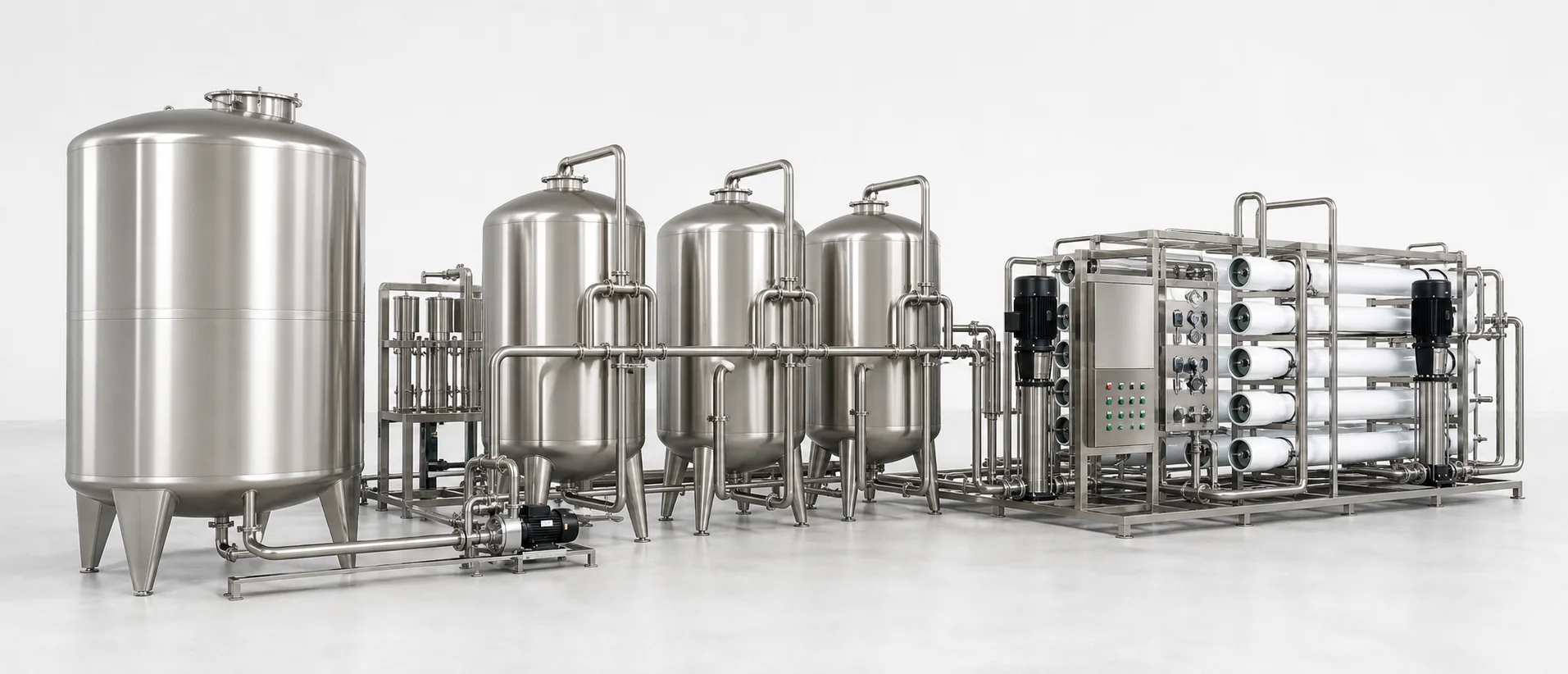
Confirm net treated-water flow at the filler connection. Recovery, sanitation and transfer demand can reduce usable flow.
Review this interface basis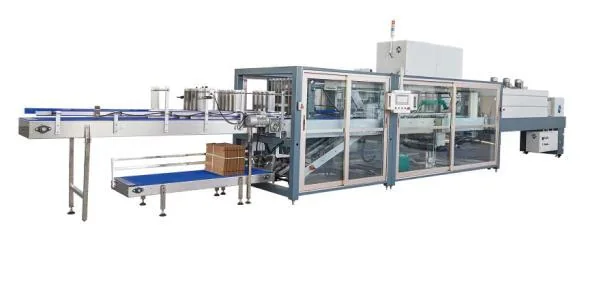
The packer is one connected capacity node; pack pattern, cycle, bottle behavior and discharge flow set the usable rate.
Review this interface basisSource: Allot Tech Beverage Bottling Catalog 2026. Images are representative equipment references; final models and configurations remain project-specific.
System boundary before machine list
A complete equipment list can still leave an incomplete production system. The buyer needs one boundary for materials, utilities, controls, counts and acceptance so every supplier is describing the same operating result.
Name the first controlled input and the final accepted output. For a PET water line this may begin with released product water and approved preforms, and end with accepted packs at the agreed line-end counter.
Record the mechanical elevation, electrical load, utility condition, control signal, material condition and document owner at each equipment interface. A connection is not complete because two machines appear beside each other on a layout.
Each interface needs a drawing, schedule, signal test, utility measurement or witnessed production check. The approval record should identify the revision and the party that closes an exception.
Minimum evidence set
Questions before specification
Answers are planning guidance. Project requirements and performance remain subject to confirmed data and agreements.
No. The map is a review framework. The confirmed process, bottle supply and pack format determine which streams and nodes apply.
The buyer, equipment suppliers and integration party should review the interfaces that fall within their confirmed responsibilities.
Next buyer step